
Donovan Young named program officer
Announcements
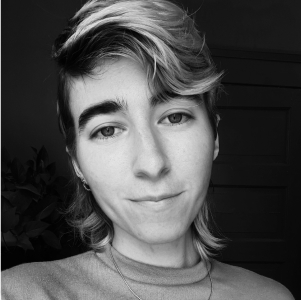
Donovan Young, program associate for social impact and strategy at The Char and Chuck Fowler Family Foundation, will join The George Gund Foundation in June as a program officer. In this new role, Donovan will work with the program directors for Thriving Families and Social Justice and Public Education on all aspects of grant reviews, community engagement, and various projects and programs.
In his current role, Donovan works to ensure that the Fowler Family Foundation’s philanthropy supports grantee partners, engages community, and aligns with equitable social impact. Since joining the team in June 2020, Donovan has leveraged financial, intellectual, and social capital to help nonprofits better serve their respective communities and achieve their missions.
Donovan previously held internships at Case Western Reserve University’s office of corporate relations, Neighborhood Connections, and served as a research assistant for the National Initiative on Mixed-Income Communities. He graduated from Case Western Reserve University magna cum laude with a Master of Science in Social Administration and a Master of Nonprofit Organizations. He also holds a Bachelor of Arts in sociology and humanities from Azusa Pacific University in California, where he also graduated magna cum laude.
Donovan and his wife currently reside in Cleveland Heights.
Related News

Information About Upcoming March 19th Primary Election
Announcements
Voting is a fundamental right and a vital part of our democratic process. On March 19, 2024, Ohio holds its presidential primary election. Polls open at 6:30 am and close at 7:30 pm.
Early in-person voting is underway and continues through March 17 at the Cuyahoga County Board of Elections, 2925 Euclid Avenue, Cleveland. Vote-by-mail is also underway: ballots must be postmarked by March 19.
For more detailed information about voting and the election, visit the Cuyahoga County Board of Elections website.
There is only one issue included on the Cuyahoga County-wide primary ballot: Issue 26, the Cuyahoga County Health and Human Services Levy. It is located at the end of the ballot. Issue 26 proposes to extend an existing 4.8 mill tax levy for eight years. It is not a tax increase. The 4.8 mill renewal levy generates $137 million per year and is a substantial component of Cuyahoga County’s social safety net.
Levy funding currently provides support for services to seniors, MetroHealth hospital, community-based health care, families in crisis, abused and neglected children, high-quality affordable preschool, and individuals dealing with mental health issues or substance abuse. The outcome of this levy will play a significant role in determining the level of support and resources available to Cuyahoga County’s most vulnerable populations.
Related News
How Foundations are Responding to the U.S. Supreme Court Affirmative Action Rulings
Announcements
The Center for Effective Philanthropy (CEP) recently published a report, How Foundations are Responding to the U.S. Supreme Court Affirmative Action Rulings.
Tony Richardson, president of The George Gund Foundation, wrote a reaction to CEP’s findings and shared a few actionable items for funders to consider.
Tony’s response can be found here.
Related News
The Gund Foundation awards $5.56 million at its February meeting
Announcements
The George Gund Foundation awarded $5.56 million at its first board meeting of the year, including several grants that have a deep impact on the mental and behavioral health needs of both adults and young people in our community.
Magnolia Clubhouse received a $100,000 grant award to support the launch of a groundbreaking Care Response pilot program in select Cleveland neighborhoods: Cudell, Detroit-Shoreway, Slavic Village, and Union-Miles. Care Response brings a mental health response to people experiencing crises when a law enforcement intervention is not deemed necessary. This model has been shown to significantly mitigate harm, particularly for people of color and those living with serious mental illness who face an outsized risk of arrest, multiple bookings, or physical danger when law enforcement is called to the scene.
Say Yes Cleveland was awarded $200,000 to pursue a rating by the Title IV-E Prevention Clearinghouse as an evidence-based program. This rating would allow Say Yes to be incorporated into Ohio’s Family First Prevention Plan as an approved integrated health prevention service, thereby providing an opportunity to access Title IV-E funds for services delivered to Cleveland Metropolitan School District students who meet the Family First candidacy criteria.
The Mental Health & Addiction Advocacy Coalition was awarded $45,000 for the second phase of an important research study designed to identify and address racial and ethnic inequities in Ohio’s community behavioral health system. According to the Coalition’s study, individuals from racial or ethnic minority groups face additional challenges in accessing quality and affordable behavioral health services, including stigma related to seeking assistance, lack of diversity and cultural competence among providers, language barriers, and distrust in the health care system.
In addition to these awards, the Foundation’s grants reflect priorities outlined in the Foundation’s What We Believe statement as well as priorities across program areas. Grants include the following:
-
- $500,000 over two years to the Young Latino Network for capacity building and general operations. The Young Latino Network focuses on building the pipeline of next generation Latino leaders in Greater Cleveland, bridging cultural and socioeconomic divides within the community and building political power through civic education and voter mobilization efforts.
-
- $30,000 to As You Sow, a national nonprofit rooted in the belief that corporations must be part of the solution to today’s climate crisis. As You Sow promotes environmental and social corporate responsibility through shareholder advocacy, coalition building, and innovative legal strategies.
-
- $600,000 over three years to the NAACP Cleveland Branch for capacity building and general operations. The Cleveland NAACP regards civic responsibility as the cornerstone of a thriving and equitable society, going beyond the important act of voting to also encompass active engagement in community affairs, advocating for social justice, and fostering a sense of unity among our city’s diverse populations.
-
- $148,000 over two years to Sankofa Circle to further a post-COVID reinvigoration of the local Collaborative for Sexual Health Equity and Learning and implement its new three-year strategic plan.
-
- $80,000 over two years to the Piano International Association of Northern Ohio (PIANO), which will be celebrating its 50th anniversary in 2025. PIANO brings the world’s best emerging pianists to Cleveland. Its flagship event—the internationally respected Cleveland International Piano Competition—begins with contestants performing their first-round pieces in March and April and ends with live competition rounds in July and August.
-
- $900,000 over three years to the Urban League of Greater Cleveland for general operations. The Urban League works to eliminate the racial, economic, and societal barriers that prevent Black Americans and other underserved communities of color from achieving their full potential.
Further details on the February 2024 grants can be found at gundfoundation.org.
In 1952, The George Gund Foundation was established by George Gund, former chair of the Cleveland Trust Company. The Foundation funds programs that enhance our understanding of the physical and social environment in which we live and increase our ability to cope with its changing requirements. Grants are made three times a year in the areas of climate and environmental justice, creative culture and arts, democracy building, public education, thriving families and social justice, and vibrant neighborhoods and inclusive economy. To date, Foundation commitments have totaled over $919 million.
Related News
The George Gund Foundation Seeks Program Officer
Announcements
The George Gund Foundation is seeking a full-time program officer to join its team. The selected candidate will play a key role in grant reviews and special projects for the program directors for Thriving Families and Social Justice (primary) and Public Education (secondary).
The Foundation has engaged Cheryl C. Perez and her team to lead the search process. The position profile with relevant details can be found by clicking here. The George Gund Foundation is an equal opportunity employer and pursues equity in all of its work, including hiring. Please share this information with potential applicants and encourage their consideration of it.
Related News
State and Federal Budget Funding Training Opportunity
Announcements
The Greater Cleveland Funders Collaborative (GCFC) is hosting a free, virtual State and Federal Budget Funding Training for nonprofit partners on Tuesday, January 23 from 3:00–4:30 pm. To register for the training, please visit Meeting Registration – Zoom.
The training will provide an overview of annual and biennial government funding opportunities available to nonprofit organizations including Ohio’s operating budget, Ohio’s capital budget, and Federal Congressionally Directed Spending requests (also known as earmarks). Attendees will learn:
-
- When these funding opportunities become available;
- Eligibility guidelines, funding limits, and duration of funding;
- How to apply for these opportunities;
- Required application materials;
- How to position your organization to apply for funds; and
- Strategies to engage your legislators.
The presenters for this training include two experts from Byers, Minton, and Associates, a government affairs consulting firm that represents GCFC in its state policy advocacy agenda: Greg Bennett, partner, who has experience with both the state legislature and non-profit sector; and Levi Gross, director of government affairs, who served as the senior legislative aide for the Ohio House Majority Floor Leader, Rep. Bill Seitz.
We hope you will join us for this important training and conversation.
Related News
The Gund Foundation awards $11.5 million at its November meeting
Announcements
The George Gund Foundation awarded $11.5 million at its November board meeting, led by significant investments in nonpartisan democracy building efforts across the state. Those investments totaled $2.5 million to nine organizations: Greater Cleveland Congregations, Greater Cleveland Neighborhood Centers Association, Khnemu Foundation, Ohio Debate Commission, Ohio Organizing Collaborative, Ohio Progressive Collaborative Education Fund, Ohio Voice, Ohio Women’s Alliance, and the Tides Foundation. These investments reflect our belief that a multicultural, power-balanced community is essential to build and sustain a more representative democracy.
In addition to democracy building, the Foundation’s grants reflect priorities outlined in the Foundation’s What We Believe statement around climate change and environmental degradation, entrenched and accelerating inequality—especially racial inequity—as well as priorities across program areas. Grants include the following:
-
- $150,000 over three years to City Fresh, founded to ameliorate the decline of grocery stores in most Cleveland neighborhoods of color. City Fresh continues to focus on these food desert neighborhoods with a network of 16 Fresh Stops in Cleveland that deliver to subscribers weekly organic produce grown by local farmers. In 2022, City Fresh sold more than 10,000 shares during the growing season, thirty percent of which were sold to low-income households, primarily households of color.
-
- $500,000 over two years to Union Miles Development Corporation for capacity building support to help advance the City of Cleveland’s Southeast Side Strategy and bolster development in the Union-Miles, Mount Pleasant, and Lee-Harvard neighborhoods. These neighborhoods, which have suffered from historic disinvestment over the years through redlining and other discriminatory banking practices, stand to receive significant levels of investment in the coming years.
-
- $200,000 over two years to The HistoryMakers, the nation’s largest African American video oral history archive and thedigital repository for the Black experience. In recognition of Cleveland’s rich Black history, The HistoryMakers is developing the Cleveland/Northeast Ohio African American leaders collection, anchored by interviews with 33 local leaders to feature in The HistoryMakers archives.
-
- $42,000 to support the FIRST Robotics Competition for six Cleveland Metropolitan School District high school teams and Cuyahoga Community College’s Youth Technology Academy team. CMSD students who compete in this national engineering and robotics competition get teamed up with engineers from businesses and universities to get hands-on experience in science, technology, engineering, and mathematics (STEM) fields, which historically neglect Black and Hispanic students.
-
- $200,000 over two years to Legal Aid, which provides help to families living in poverty when civil legal issues threaten their health, shelter, safety, education, and/or economic security. Legal Aid provides three services: direct legal assistance—advising and representing clients in court and administrative hearings, negotiations, and litigation; community education and outreach—preventative neighborhood-based work to provide people with the tools needed to avoid or resolve a legal problem; and advocacy—building community coalitions and partnerships to improve shelter, safety, and economic security for our community.
-
- $300,000 over two years to Brite Energy Innovators, the only Department of Energy sponsored energy incubator in Ohio. Brite provides mentoring, connections to its network of partners, funding assistance, and advanced testing equipment free-of-charge to early-stage clean energy entrepreneurs in Ohio. Brite focuses primarily on start-up companies within the energy grid, energy storage, and transportation sectors.
-
- $100,000 to Neighborhood Leadership Institute to support the development of grassroots leaders who support and lead community engagement efforts to strengthen neighborhoods. NLI’s focus on everyday residents—without consideration of their profession or status in the community—engages community members from all walks of life who possess a desire to make a difference in Cleveland.
-
- $50,000 to the Great Lakes Science Center (GLSC) for the Total Eclipse Festival 2024, celebrating the April 8, 2024 total solar eclipse. The event is expected to draw hundreds of thousands of visitors to Greater Cleveland due to the region’s location along the path of totality, which means several minutes of darkness when the moon completely blocks the sun. This three-day, outdoor, family-friendly event will create a broadly engaging experience that includes science and arts, with partners in music, dance, humanities, drama, and visual media. The grant will allow GLSC to underwrite small arts organizations and individual Cleveland artists.
-
- $150,000 over three years for the Ohio School-Based Health Alliance, a key partner in the Foundation’s efforts to bring sustainably funded, high-quality integrated health care—both primary and behavioral—to all Cleveland Metropolitan School District scholars. The Alliance played an indispensable role in a major victory for school-based health this year, helping secure $15 million in state general revenue funds for direct support of local school-based clinics, the first ever state general fund investment in school-based health care.
-
- $100,000 over two years to MidTown Cleveland for the AsiaTown Square Pop-up Park, providing new landscaping, updated furnishings, seating, shade areas, lighting, options for winter decorations, and other amenities for this public gathering space. The park will feature programing of all kinds and include multilingual and multi-generational dialogue on civic participation.
-
- $100,000 to HFLA of Northeast Ohio to promote the self-sufficiency of Northeast Ohio residents by providing access to fair financial resources including interest-free loans to underserved individuals across Greater Cleveland. HFLA’s products include standard loans, which can be applied to almost any financial emergency that may arise; educational loans, which can be used for undergraduate, graduate, vocational, or technical education for students in Northeast Ohio; and small business loans, which can be used to help expand an existing business or start a new one.
-
- $160,000 to the United Black Fund for continued support for ecosystem building activities related to the FutureLAND initiative. FutureLAND is a collaboration between the City of Cleveland, JumpStart, United Black Fund, and local entrepreneurs that seeks to support entrepreneurs who, because of race, ethnicity, and/or gender, face significant barriers in starting and growing businesses, including access to capital and social networks.
-
- $60,000 for the Excellence in Teaching Award, a collaboration among the Cleveland Metropolitan School District, Cleveland Teachers Union, and the George Gund and Cleveland foundations. The award recognizes and rewards CMSD teachers who demonstrate instructional expertise, creativity, and innovation in their classrooms; who make learning engaging, vibrant, and relevant for students; and whose work and accomplishments set a standard of excellence for all teachers. Following their recognition as award winners, teachers agree to share their practice with their peers in the district.
In 1952, The George Gund Foundation was established by George Gund—former chair of the Cleveland Trust Company. The Foundation funds programs that enhance our understanding of the physical and social environment in which we live and increase our ability to cope with its changing requirements. Grants are made three times a year in the areas of climate and environmental justice, creative culture and arts, democracy building, public education, thriving families and social justice, and vibrant neighborhoods and inclusive economy. To date, Foundation commitments have totaled over $914 million.
Related News

The Gund Foundation awards $11.8 million at its July meeting
Announcements
The Board of Trustees approved several grants that continue the Foundation’s deep commitment to restorative justice. American Civil Liberties Union (ACLU) of Ohio, Ohio Justice and Policy Center, Towards Employment, and the Juvenile Justice Coalition are among those grantee partners working toward long-term criminal legal system reform. These organizations are moving Cleveland and Ohio away from a system of cash bail; reducing barriers to successful community re-entry for persons previously incarcerated; advocating for an end to mandatory bindover of youth to the adult prison system; and catalyzing progress within our local institutions.
“Our grantee partners are embodying the difficult balance of daily and systematic work that moves our community toward a model of restorative justice,” said Tony Richardson, president of The George Gund Foundation. “Even more critically, their work is expressly informed and driven by the lived experience of those confronting injustices in the juvenile and adult carceral systems, both locally and statewide.”
For example, the ACLU of Ohio will serve as fiscal manager for a two-year $150,000 grant on behalf of a reform-focused partnership they have with Children’s Law Center-Ohio office and the Schubert Center for Child Studies at Case Western Reserve University. The primary goal of the partnership is to develop and implement the Cuyahoga County Youth Justice Action Plan. The plan will call for just policies and equitable culture change at the Cuyahoga County Juvenile Detention Center, alternatives to juvenile lock-up through community partnerships, and public communications strategies which dispel myths and stereotypes around juvenile crime.
Additional grants across program areas include:
-
- $200,000 over two years to Enlightened Solutions to support its research-based solutions that center the lived experiences of a diverse group of Black women in Cleveland, such as the Project Noir survey.
-
- $150,000 over two years to The Plexus Education Foundation for the development and implementation of a Workplace Inclusion Hub, providing tools, best practices, and assistance to small businesses on how to foster LGBTQ+ programs and policies.
-
- $235,000 to National Disability Institute to co-design an investment strategy for people with disabilities in Northeast Ohio.
-
- $75,000 to Linking Employment, Abilities & Potential (LEAP) to support efforts that provide access, eliminate barriers, and create opportunities for persons with disabilities.
-
- $150,000 to Cleveland Print Room to advance the art and appreciation of the photographic image in all its forms by providing affordable access to a community darkroom and workspace, gallery exhibition, educational programs, and collaborative outreach.
-
- $50,000 over two years to Dobama Theatre for the FOCUS Apprentice Program, a professional development program that provides an opportunity for emerging artists from BIPOC, LGBTQ+, Deaf, Disabled, and other communities to receive close mentorship and professional credits in the areas of design, stage management, and technical direction.
-
- $55,000 to The Musical Arts Association for the Arts Administration Internship Pilot, an immersive six-month program, providing hands-on experience in the world of performing arts management through rotating internships across The Cleveland Orchestra.
-
- $600,000 over three years to Positive Education Program (PEP) for investments in staff training, coaching, and support as they continue to provide direct and consultative services for children who experience complex developmental trauma, mental health issues, and autism.
-
- $1,500,000 over three years to support Say Yes to Education scholarship recipients through their postsecondary pursuits, including expanded and intensive coaching and wraparound services that help students enroll in, persist through, and graduate from college or postsecondary certificate programs.
-
- $300,000 over two years to Rails to Trail Conservancy for continued leadership and technical assistance on trail development, access, and resources, including facilitation of the Industrial Heartland Trails Coalition.
-
- $150,000 over two years to Environmental Law & Policy Center of the Midwest, a public interest law firm that promotes development of clean-energy resources and implementation of energy-efficiency technologies, for work in its Ohio office.
A full list of July 2023 grants can be found at gundfoundation.org.
In 1952, The George Gund Foundation was established by George Gund—former chair of the Cleveland Trust Company. The Foundation funds organizations that enhance our understanding of the physical and social environment in which we live and increase our ability to respond to its ever-changing nature. Grants are made three times a year in the areas of climate and environmental justice, creative culture and arts, democracy building, public education, thriving families and social justice, and vibrant neighborhoods and inclusive economies. To date, Foundation commitments have totaled nearly $903 million.
Related News
Kayli Salzano named 2023–25 George Gund Foundation Fellow
Announcements
Kayli Salzano, former gallery manager at Waterloo Arts, has been selected as the 2023–25 George Gund Foundation fellow. In their previous role, Salzano sought and mounted art exhibitions featuring Northeast Ohio artists and organized public programs to connect visual art with community projects. They implemented a public open call process for generating exhibitions and re-established a gallery committee to assist the organization in collaborative decision-making on behalf of artists and educators.
Prior to this, Salzano worked as project + visiting artist coordinator at Reinberger Gallery where they assisted the director in gallery operations, facilitated a weekly artist lecture series, and maintained the Institute’s collection of artworks. Salzano has additionally worked as an art handler for several exhibition spaces in Cleveland, and they have completed both a gallery internship at Praxis Fiber Workshop and an Artist Leadership Residency hosted by Assembly for the Arts and Cleveland Leadership Center.
Salzano received their Bachelor of Fine Arts from the Cleveland Institute of Art, electing to complete one semester at the Pennsylvania Academy of Fine Arts in Philadelphia to hone their skills in traditional sculpture. In addition to maintaining a visual arts practice spanning performance, fiber art, and installation, Salzano enjoys cooking, biking, and gardening.
Salzano resides in Cleveland and began their work with the Foundation in early June.
The George Gund Foundation Fellows program, started in 2004, provides an opportunity for civic-minded professionals to work in philanthropy, at a foundation that proudly plays an active role in supporting equity, climate justice, and democracy throughout Greater Cleveland and in organizations, initiatives, and policy deliberations that impact our community. Each fellow, selected from a nationwide pool of applicants, works at the Foundation for two years.
Related News
Our commitment to racial justice
Announcements
Since 1952, The George Gund Foundation has been an ardent supporter of public education, and we continue to work with our heroic community partners to provide equitable access to high-quality education and career opportunities for Cleveland youth and families. The Cleveland Metropolitan School District (CMSD) boasts a vibrant, PreK–12 student body comprised of scholars who come from various racial, ethnic, cultural, and socioeconomic backgrounds. According to a CMSD fast facts infographic, 63.8 percent of CMSD scholars identify as African-American; 17.2 percent as Hispanic; 14.5 percent as White; and 4.5 percent are listed as other.
Whenever I visit a CMSD school building, I always leave feeling inspired by the abundance of diverse faces, their respective lived experiences, their brilliance, and their unwavering resilience. In racially and culturally diverse settings, we are able to learn with and from other people and communities, but such settings also present opportunities for us to 1) look inwardly and learn about ourselves; 2) examine and challenge our assumptions, beliefs, and values; and 3) work toward becoming the best version of ourselves. Diversity is our superpower, and it is perhaps the only thing that can truly shape the future of our country and humanity for the better.
Yesterday, the U.S. Supreme Court majority—in a landmark ruling—held that U.S. colleges and universities can no longer consider race as a basis for college admissions. As an African-American, first-generation college student, who had to overcome racism, poverty, and homelessness in pursuit of a college education and upward mobility, I am deeply appreciative and unapologetic about the fact that race played a role in my college admission process. SCOTUS got it wrong: race-based affirmative action is still very much needed to ensure equitable access to higher education and to prevent both intentional and unintentional discriminatory practices in college admissions.
When I applied to college, my academic profile paled in comparison to my white and suburban school counterparts, but the admissions team saw something in me that challenged both traditional notions of academic excellence and indicators of college success. Far too often institutions of higher education use trivial gatekeeping measures such as culturally-biased standardized testing, expected family contribution, and legacy/college affiliation as a basis for admissions. Such practices are inherently discriminatory, as they create a bar to access for first-generation college students—especially those who come from historically marginalized groups and under resourced families. In addition to barring access to higher education, these discriminatory practices help widen and perpetuate existing gaps in educational attainment, financial security, and other pertinent life outcomes between white people and other racial/ethnic groups.
I am extremely fortunate.
Thankfully, Oberlin College’s admissions team employed a holistic review of my candidacy. They saw grit, resiliency, a high grade-point average, a rigorous course load, glowing letters of support, community service, extracurricular activities, and a young, Black man whose lived experience could bring a unique perspective to classroom discussions and to the campus community at large. Moreover, the admissions team got it right: while race is a social construction, it is a real phenomenon that has real life ramifications in our country and beyond. Simply put, race matters! As history suggests, when declarations of “equality” or “opportunity for all” go unchecked, policies and practices that give rise to disparate treatment and/or disparate impact tend to ensue. Given our turbulent and unreconciled past, any effort or pursuit of “equality” will fall short as equality is not a substitute for or a viable pathway to justice and/or wellbeing.
The United States of America’s record on racism is dismal, and while the SCOTUS majority and various elected officials—quite erroneously—believe they can legislate racism out of our country’s collective consciousness, racism is deeply embedded into the fabric of our country’s DNA, public/private institutions, and citizenry. Is it possible to achieve a full-fledged democracy where policymakers lack empathy, compassion, and sensitivity to the harsh realities of structural, systemic, and institutional racism? At The George Gund Foundation, we remain firmly committed to supporting our partners in education, along with the plethora of students and families deeply affected by SCOTUS’ callous and unpatriotic decision to eliminate race-conscious admissions at colleges and universities.

Tony Richardson, President