
The George Gund Foundation awards $7.1 million at its February 2026 meeting
George Gund
Climate Justice Can Only Be Pursued Through Collaboration
John Mitterholzer | Program Director, Climate and Environmental Justice
The George Gund Foundation aims to reduce greenhouse gas emissions in Ohio through a justice and equity lens, and we have learned that our efforts are most impactful when we collaborate across sectors.
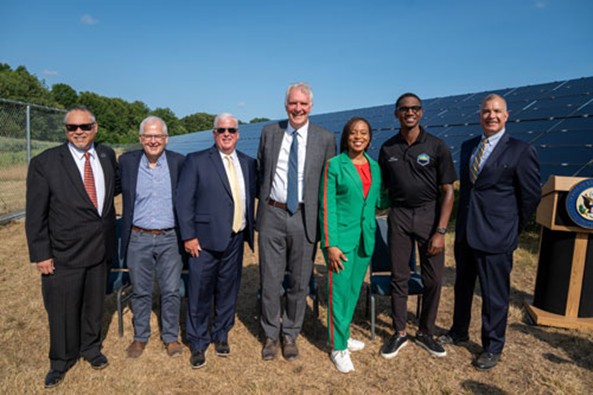
More than twenty years ago, the Foundation’s Climate and Environmental Justice program funded a sustainability manager position at the City of Cleveland, one of the first cities in the world to establish such a role. The creation of this position developed into a partnership between the Foundation and the City of Cleveland to advance sustainability, climate mitigation, and environmental justice initiatives. Expanding this work, the Foundation also provided support to Cuyahoga County to create a new position: Chief of Sustainability and Climate; and the Greater Cleveland Partnership (GCP) for a Director of Sustainability Initiatives.
In 2024, the City and County updated their strategic climate action plans. Both plans make clear that transitioning to clean energy is a critically important step toward reducing greenhouse gas emissions and improving air quality. In response, the Foundation provided support for Cleveland Public Power to create a position focused on transitioning to cleaner energy sources while advancing environmental justice. Relatedly, the Foundation provided support for Cuyahoga County to explore the creation of a county-wide utility provider, resulting in the creation of Cuyahoga Green Energy, which focuses on clean energy development.
Following the passage of the Inflation Reduction Act (IRA) several years ago, the Foundation convened grantee partners and City and County leaders to discuss opportunities and identify projects for IRA grant applications. These convenings led to multiple successful grant awards totaling more than $285 million to advance clean energy and climate projects. These projects are expected to reduce greenhouse gas emissions by more than one million metric tons.
Considering the global impact of climate change, no locale can afford to do this work in isolation. To that point, the Foundation has organized and led trips for the City, County, GCP, Environmental Health Watch, and Power a Clean Future Ohio to participate in the United Nations Climate Change Conferences in Egypt, the United Arab Emirates, and Brazil. These convenings have provided Cleveland leaders with opportunities to share climate mitigation efforts on a global stage and to learn from leaders of global climate initiatives.
Climate change work reaches further than what any one Foundation, organization, or public entity can address. The best chances for making change locally and globally occur when we leverage our work through impactful, effective, cross-sector partnerships.
Awarded Grants Preview
ACLU of Ohio Foundation
Operating support | $140,000 | over 2 years | Thriving Families & Social Justice
Children’s Law Center
Ohio Youth Justice Initiative | $200,000 | over 2 years | Thriving Families & Social Justice
Cleveland Classical Guitar Society
Operating support | $40,000 | over 2 years | Creative Culture & Arts
County of Cuyahoga
Fresh Water Institute | $200,000 | over 2 years | Climate & Environmental Justice
Dolly Parton’s Imagination Library of Ohio
Dolly Parton’s Imagination Library in Cuyahoga County | $250,000 | over 5 years | Public Education
Environment and Energy Study Institute
Operating support | $300,000 | over 3 years | Climate & Environmental Justice
HFLA of Northeast Ohio
Operating support | $125,000 | Economic Justice & Community Power
Ohio CDC Association
Operating support | $250,000 | over 2 years | Economic Justice & Community Power
Ohio Justice and Policy Center
Operating support | $300,000 | over 2 years | Thriving Families & Social Justice
Power a Clean Future Ohio
Operating support | $785,000 | over 3 years | Climate & Environmental Justice
Sparrow’s Fortune
Capacity building | $20,000 | Creative Culture & Arts
Abolishing property taxes, as some activists in Ohio propose, seems like a simple, powerful appeal to Ohioans beleaguered by increased tax bills. Yet, what would it mean if this proposition became law? Zach Schiller, research director for longtime grantee Policy Matters Ohio, identifies an annual loss of $21.4 billion that undergirds our public schools, emergency services, libraries, and more.
Cleveland Owns is an economic democracy incubator that builds cooperative businesses and leads campaigns for community control of resources. One example is People’s Budget Cleveland (PB CLE), which Cleveland Owns cofounded in 2021. PB CLE recently launched the People’s Budget pilot, which will enable Slavic Village residents to allocate $100,000 to neighborhood projects through a participatory budgeting process.
Ohio Coalition for Equity and Adequacy of School Funding, organized in 1990 to challenge the constitutionality of Ohio’s school funding system (DeRolph v. State), is leading the Vouchers Hurt Ohio litigation effort. Over 330 Ohio public school districts have joined a lawsuit over the EdChoice private school voucher program, which will divert $1.7 billion over the biennial from public school districts.
Literary Cleveland—with support from Ohio Humanities, Ohioana Library Association, and the Toni Morrison Society—will coordinate a yearlong series of programs across Ohio celebrating Toni Morrison. Beloved: Ohio Celebrates Toni Morrison, organized around the centennial anniversary of the author’s birth, aims to deepen understanding history through literature, foster discussion and support democracy, and uplift an important Ohioan.
Foundation News

Apply for a Grant
The next deadline to submit a grant proposal is March 15, 2026. Details about our grantmaking priorities and application process can be found on our website.
Related News

The Gund Foundation awards $16.9 million at its November meeting
George Gund
Reflecting on the Impact of Say Yes Scholarships
Ann Mullin | Executive Vice President; Program Director, Public Education
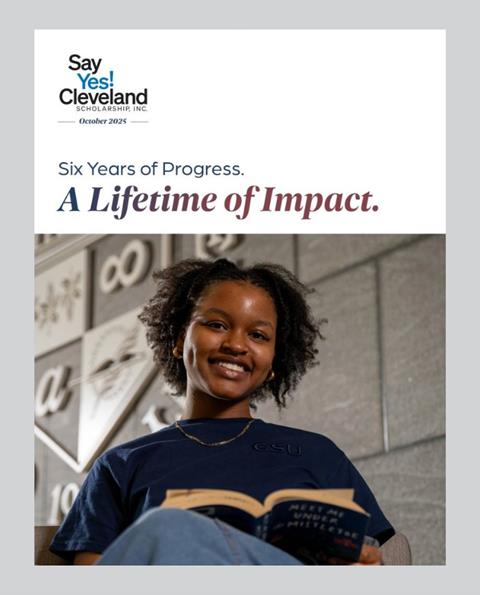
The George Gund Foundation is one of the founding partners of Say Yes Cleveland, supporting both scholarships and school support services. Recently, Say Yes issued a report: Six Years of Progress. A Lifetime of Impact, a comprehensive review of the scholarship program and the impact Say Yes has had on more than 4,600 scholars who have benefitted from scholarships, mentorship, and on-campus coaching since its 2019 launch.
Say Yes! Cleveland Six Years of Progress. A Lifetime of Impact.
Say Yes guarantees every eligible Cleveland Metropolitan School District (CMSD) and partnering charter school graduate a tuition scholarship to attend a four- or two-year college or university or accredited training program. Over $108 million has been raised for the scholarship fund thus far, which is invested in such a way as to provide tuition scholarships over the next 25 years—affecting two generations of Clevelanders.
The report articulates how the scholarship program has evolved to better understand and meet the needs of scholars to help them get to graduation, including policy changes and additional funding support. These investments have proven pivotal, as evidenced by several encouraging takeaways for the first graduating classes:
Enrollment: Postsecondary enrollment among CMSD graduates initially rose by 7 percentage points from the 2018 baseline—the largest first-year gain in the Say Yes network. Despite Covid-19’s negative effect in the years following, overall postsecondary enrollment is now 4 points above baseline. Students are also choosing four-year colleges at higher rates: 69 percent of enrolled students from the class of 2024 chose a four-year program, up 7 points from baseline.
Persistence: Overall, 64 percent of Say Yes scholars returned for a second year of postsecondary studies: 1 point above baseline. Persistence rates at four-year institutions have increased by 6 points since the launch of Say Yes, from 70 percent to 76 percent in 2023. In some cases, Say Yes students are now persisting at higher rates than a college’s overall student body.
Completion: Since 2019, 713 Say Yes scholars have graduated, earning 1,077 degrees and certificates—many with multiple credentials. On-time completion for the first Say Yes class of 2019 held steady at the 30 percent baseline (38 percent at four-year institutions). Among graduates from that same class, 71 percent earned a bachelor’s degree, up from 68 percent in 2018.
The Foundation is proud to help open the door for thousands of CMSD students to pursue postsecondary studies each year and increase college completion among our graduates.
Awarded Grants Preview
At its November meeting, The George Gund Foundation Board of Trustees voted to approve a slate of 135 grants, with a commitment totaling $16,900,308.
- Cleveland Public Theatre Inc.: Operating support and community ensembles. | $250,000 over 2 years | Creative Culture and Arts
- College Now Greater Cleveland Inc.: Say Yes Cleveland Scholarship postsecondary coaching support. | $810,000 over 3 years | Public Education
- Institute for Conservation Leadership: Operating support. | $525,000 over 3 years | Climate and Environmental Justice
- The Marshall Project Inc.: Local newsroom in Cleveland. | $750,000 over 3 years | Thriving Families and Social Justice
- Museum of Contemporary Art Cleveland: Operating support. | $100,000 | Creative Culture and Arts
- NuPoint Community Development Corporation: Operating support. | $500,000 over 2 years | Economic Justice and Community Power
- Presidents’ Council Foundation Inc.: Operating support. | $350,000 over 2 years | Economic Justice and Community Power
- Rails to Trails Conservancy: Operating support. | $300,000 over 2 years | Climate and Environmental Justice
- Say Yes Cleveland Operations: Administrative support. | $500,000 over 2 years | Public Education
CreativeOhio Advocacy Leadership Institute
CreativeOhio is the statewide advocacy organization that establishes creativity as a core economic driver benefiting all Ohioans. This year, 26 Ohio arts and culture leaders participated in the CreativeOhio Advocacy Leadership Institute, a six-month journey designed to strengthen the collective voice of the state’s creative sector. The cohort met with policymakers, artists, and advocates to explore how to lead change in arts and culture today.
DigitalC
Since January 2024, DigitalC has worked to bridge the digital divide by deploying a state-of-the-art broadband network intended to cover 140,000 Cleveland households. As of November, DigitalC is providing more than 7,000 Cleveland homes and 17,500 residents with high-speed internet access for only $18/month. Additionally, DigitalC has facilitated 15,000+ digital-skills training sessions.
News from the Greater Cleveland Funders Collaborative
Two new nonprofit support services are now available. The Nonprofit Legal Resource Center provides quick guidance on specific legal questions and access to expert attorneys for more complex issues. Big Change Consulting provides customized financial education, advice, and deeper dive consultation to local nonprofits. Contact them via email to learn more. For more information, contact the Cuyahoga Human Services Chamber.
Power a Clean Future Ohio
Power a Clean Future Ohio (PCFO) was invited to the United Nations COP 30 Local Leaders Summit in Rio de Janeiro, Brazil, where representatives shared their work with more than 1,400 leaders from around the world. PCFO is driving Ohio’s clean energy transition by working directly with local governments to develop and implement carbon reduction plans that are achievable, measurable, equitable, and cost-effective.
To date, 53 communities across Ohio have joined PCFO in its commitment to reducing emissions and advancing clean energy.
Foundation News
Presenting the newest photography commission of The George Gund Foundation
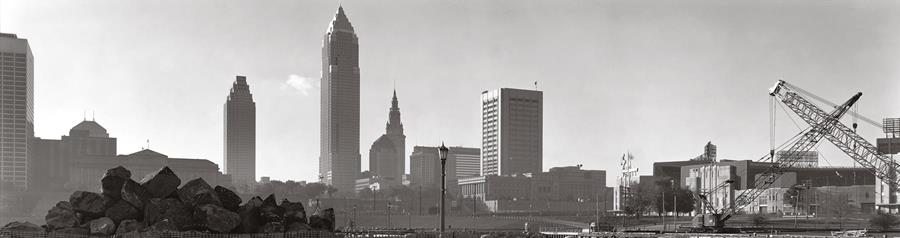
The George Gund Foundation’s 2025 Photography Commission, Bridges, features fine arts photographer Kristine Potter as she turns her lens on Cleveland’s bridges—structures that reveal both the weight of civic ambition and the quiet persistence of new life around them.
Apply for a Grant
The next deadline to submit a grant proposal is March 15, 2026. Details about our grantmaking priorities and application process can be found on our website.
Related News
Presenting the newest photography commission of The George Gund Foundation
Presenting the newest photography commission of
The George Gund Foundation
“Bridges: between generations, between despair and determination, between what we have inherited and what we dare to create.”
The George Gund Foundation’s 2025 Photography Commission, Bridges, features fine arts photographer Kristine Potter as she turns her lens on Cleveland’s bridges—structures that reveal both the weight of civic ambition and the quiet persistence of new life around them. The images sometimes stand as monuments and other times recede into the landscape. Potter notes, “The eras they represent are visible in their forms, in their wear, in the way the city now moves around them.”
The photographer’s association of time and bridges are echoed by Catherine Gund, chair of the Foundation. In her letter, she welcomes the fourth generation of Gund family members to the Board of Trustees and highlights the expansion of Cleveland community board members. Against the backdrop of tumultuous times, she identifies the strength of bridges “between generations, between despair and determination, between what we have inherited and what we dare to create.”
Foundation president, Tony Richardson, reflects on the importance of bridges as connectors in his own life and at the Foundation—metaphorically and literally. Bridges cannot stand without infrastructure, support, and care. The Foundation’s partners are no different. In the face of deep funding cuts to vital public services and programs, the Foundation increased its 2025 grantmaking payout. We remain constant and true to our values. We remain a bridge in our beloved community.
Related News
Mikayla Coleman named 2025-2027 George Gund Foundation fellow
George Gund
Mikayla Coleman is the 2025–2027 George Gund Foundation fellow working across program areas. Mikayla previously served as the community involvement coordinator at Metro West Community Development Organization, where she supported resident-led initiatives, coordinated neighborhood events, and deepened partnerships with local groups. She also worked as a teaching artist and administrative contractor with the Center for Arts-Inspired Learning, where she mentored teens through the ArtWorks program, provided marketing and planning support for youth-led events, and assisted with interviewing, alumni tracking, and organizational communications.
Mikayla holds a Master of Arts in Creative Business Leadership from the Savannah College of Art & Design and a Bachelor of Science in Public Management and Policy from Cleveland State University. She is also a graduate of the Neighborhood Leadership Development Program, where she focused on equity-centered community leadership.
The George Gund Foundation fellows program, started in 2004, provides an opportunity for civic-minded professionals to work in philanthropy at a foundation that proudly plays an active role throughout Greater Cleveland and in organizations, initiatives, and policy deliberations that impact our community. Each fellow, selected from a nationwide pool of applicants, works at the Foundation for two years.
Related News
The George Gund Foundation awards $7.1 million at its February 2026 meeting
George GundClimate Justice Can Only Be Pursued Through CollaborationJohn Mitterholzer | Program Director, Climate and Environmental Justice The…
The Gund Foundation awards $7.2 million at its February meeting
Letter from the President
At The George Gund Foundation, elections do not change our values or beliefs; nor do they change the organizations we fund or the people we seek to serve. We are privileged to partner with dynamic organizations and people whose lived experience and work allow us to advance the Foundation’s mission. As such, we listen to our partners and are honored to support and work alongside them.
From grassroots organizing, to direct service, to public policy—we appreciate the interconnectedness of societal issues and therefore support organizations that embed interdisciplinary strategies into their work. We embrace the throughlines that emerge across our grantmaking portfolio.
It is our belief that no person, community, or issue is an island.
We are not wavering from What We Believe and will continue serving as a trusted and reliable community partner.
Ever onward,
Tony Richardson | President
February Grantmaking Climate
As the torrent of Executive Branch actions from the White House dominates the daily news cycle, there is equally important work happening in Congress—albeit more quietly—that will have profound impact on residents here in Cleveland and across Ohio, particularly those of low wealth. Debates on how much money (read: tax revenues) the federal government will have to spend and how it will spend it going forward are now underway.
So much is at stake. Nearly two-thirds of every dollar invested in health and human services in Ohio originated with the federal government. In addition, Ohio's state operating budget and a combination of state and federal funds comprise a whopping 75 percent of health and social services spending in Cuyahoga County. Essential supports like hunger relief (SNAP) and health care (Medicaid) hang in the balance for tens of thousands of Clevelanders and millions of Ohioans.
To fight growing inequality—both racial and income—we support efforts to make federal budget and tax policy fair and equitable. We’re privileged to partner with a set of nonpartisan nonprofit organizations that have deep expertise in analyzing and influencing budget and tax policy, including Policy Matters Ohio, Institute on Taxation and Economic Policy, Center on Budget and Policy Priorities, and Coalition on Human Needs. Backed by scrupulous data, they put a human face on fiscal decisions. Follow their critical work (and even lend your voice!) to stay plugged in to these momentous debates.
Foreword by
Marcia Egbert | Program Director, Thriving Families + Social Justice
Awarded Grants Preview

I think of the women who came before: A Pictorial Quilt of Reproductive Justice in Cleveland
George Gund
CARMEN WINANT Photographer
I began this project as I often do: with an outsize sized idea informed by my own fascination with and dedication to evolving feminist values, histories, and coalition-making strategies.
When I’m lucky and my eyes are open, a project about an “idea” rapidly becomes a project about people. There is no such thing as feminism with feminists, there is no such thing as reproductive justice without reproductive justice workers. I learn and re-learn this lesson on every project: that human beings make these organizations work and run, and that they – who are both pictured in this work and enable its conditions – are the most fitting subject of creative inquiry-making and mutual care networking.
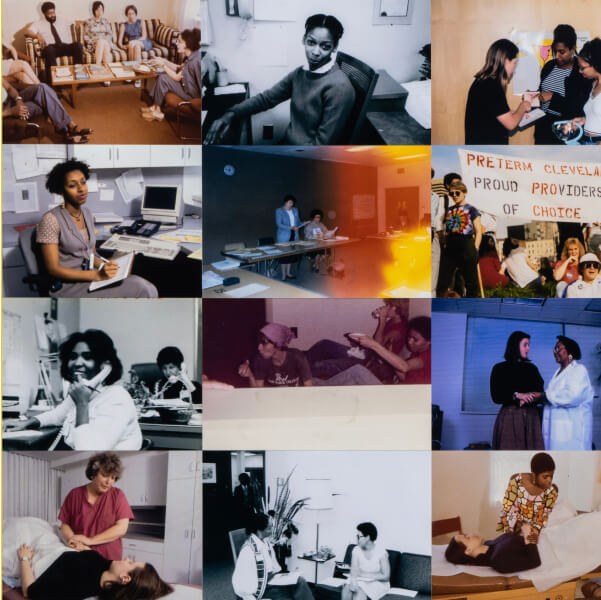
The annual theme of 2022-2023 George Gund photography commission is reproductive justice; as the artist selected to contend with this subject, and as a resident of Ohio, I sought to better understand the clinics and health center landscape around Cleveland. It was important to at once make photographs of the people doing this work in the present moment as well as to reach back in history – in some cases, to before the point that abortion was legalized in 1972 – and braid together those found and authored images in larger sets. Time was not to function linearly, but more like a constellation in which photographs of reproductive care works across decade met one another.

I began conversations around this project after the Dobbs decision was leaked and just weeks before it was formally announced. Because I live in Columbus (just a few miles from the statehouse), I was at that point already subject to the so-called “heartbeat bill” which denies legal and safe abortion between five or six weeks after conception (and around which no exceptions are made for “hard cases” such as rape, incest, or a fetus determined to possibly have Down syndrome). Folks were mobilizing, but there was, and is, also so much despair. While this project works to picture reproductive justice workers for all they do – from pap smears to birth work to gender affirming care – to not name abortion as an urgent part of this picture, at this moment, would be entirely misguided. The stripping of that essential right undergirded my desire to make this project, and learn from the workers who are and were engaged in care, advocacy, and struggle.
The project started slowly: I asked friends and comrades who they knew in Cleveland who were engaged in this work. When I met people, I asked them too. Barbara Tannenbaum, the curator of photography at the Cleveland Museum of Art, pointed me to Roberta Aber, who pointed me to Bonnie Bolitho and Betsey Kaufman, the former CEOs of greater planned parenthood in Canton and Cleveland, respectively, who hosted me at their home many times. I found my way to the Western Reserve Historical Society, which holds the regional planned parenthood papers, and to Cleveland State University’s Special Collections, where a generous librarian Elizabeth Piwkowski helped me locate and scan a portion of the Womanspace photographs from their albums. Perhaps most meaningfully of all, I found my way to Preterm, a clinic that has been opened since 1974. With the utmost generosity, Sri Thakkilapati and Colleen Damerell surfaced their archival material for me, allowing me to scan photographs from their collection as I needed. I also recorded audio interviews with Sri, along with Chrisse France (the former director of preterm), and Bonnie and Betsey. This work does and cannot exist without these acts of trust and openness; they make everything possible, and I am so, so grateful.
Perhaps the greatest challenge of all was making my own pictures for this project, an exercise that I have fallen out of practice with. While I am trained as a photographer, and teach photography to students at OSU, I moved away from shooting pictures for my own work in favor of using archival materials over fifteen years ago. In making this project, I returned to shooting 35mm film – at Preterm, with Bonnie and Betsey, the staff of Birthing Beautiful Communities in Cleveland, and with Iris Harvey, the President and CEO of Planned Parenthood of Greater Ohio, in a health center in Akron. While historical legacy is crucial to this work, too it matters to see it in real time and space, and make sense of reproductive justice care work on a continuum.
It is my hope that this work points to the normalcy of this healthcare work, thereby working to undermine its stigma. These are pictures of (almost exclusively) women staffers answering the phone, readying rooms for patients, having birthday parties in the office, and inputting appointment information into computers. For lack of a better word, this work is unsensational, and the pictures I have made, as with the pictures I have drawn from in the archive, meaningly – powerfully – reflect just that.
CARMEN WINANT
Photographer
Related News
The Gund Foundation awards $11.5 million at its November meeting
George Gund
The George Gund Foundation awarded $11.5 million at its November board meeting, led by significant investments in nonpartisan democracy building efforts across the state. Those investments totaled $2.5 million to nine organizations: Greater Cleveland Congregations, Greater Cleveland Neighborhood Centers Association, Khnemu Foundation, Ohio Debate Commission, Ohio Organizing Collaborative, Ohio Progressive Collaborative Education Fund, Ohio Voice, Ohio Women’s Alliance, and the Tides Foundation. These investments reflect our belief that a multicultural, power-balanced community is essential to build and sustain a more representative democracy.
In addition to democracy building, the Foundation’s grants reflect priorities outlined in the Foundation’s What We Believe statement around climate change and environmental degradation, entrenched and accelerating inequality—especially racial inequity—as well as priorities across program areas. Grants include the following:
-
- $150,000 over three years to City Fresh, founded to ameliorate the decline of grocery stores in most Cleveland neighborhoods of color. City Fresh continues to focus on these food desert neighborhoods with a network of 16 Fresh Stops in Cleveland that deliver to subscribers weekly organic produce grown by local farmers. In 2022, City Fresh sold more than 10,000 shares during the growing season, thirty percent of which were sold to low-income households, primarily households of color.
-
- $500,000 over two years to Union Miles Development Corporation for capacity building support to help advance the City of Cleveland’s Southeast Side Strategy and bolster development in the Union-Miles, Mount Pleasant, and Lee-Harvard neighborhoods. These neighborhoods, which have suffered from historic disinvestment over the years through redlining and other discriminatory banking practices, stand to receive significant levels of investment in the coming years.
-
- $200,000 over two years to The HistoryMakers, the nation’s largest African American video oral history archive and thedigital repository for the Black experience. In recognition of Cleveland’s rich Black history, The HistoryMakers is developing the Cleveland/Northeast Ohio African American leaders collection, anchored by interviews with 33 local leaders to feature in The HistoryMakers archives.
-
- $42,000 to support the FIRST Robotics Competition for six Cleveland Metropolitan School District high school teams and Cuyahoga Community College’s Youth Technology Academy team. CMSD students who compete in this national engineering and robotics competition get teamed up with engineers from businesses and universities to get hands-on experience in science, technology, engineering, and mathematics (STEM) fields, which historically neglect Black and Hispanic students.
-
- $200,000 over two years to Legal Aid, which provides help to families living in poverty when civil legal issues threaten their health, shelter, safety, education, and/or economic security. Legal Aid provides three services: direct legal assistance—advising and representing clients in court and administrative hearings, negotiations, and litigation; community education and outreach—preventative neighborhood-based work to provide people with the tools needed to avoid or resolve a legal problem; and advocacy—building community coalitions and partnerships to improve shelter, safety, and economic security for our community.
-
- $300,000 over two years to Brite Energy Innovators, the only Department of Energy sponsored energy incubator in Ohio. Brite provides mentoring, connections to its network of partners, funding assistance, and advanced testing equipment free-of-charge to early-stage clean energy entrepreneurs in Ohio. Brite focuses primarily on start-up companies within the energy grid, energy storage, and transportation sectors.
-
- $100,000 to Neighborhood Leadership Institute to support the development of grassroots leaders who support and lead community engagement efforts to strengthen neighborhoods. NLI’s focus on everyday residents—without consideration of their profession or status in the community—engages community members from all walks of life who possess a desire to make a difference in Cleveland.
-
- $50,000 to the Great Lakes Science Center (GLSC) for the Total Eclipse Festival 2024, celebrating the April 8, 2024 total solar eclipse. The event is expected to draw hundreds of thousands of visitors to Greater Cleveland due to the region’s location along the path of totality, which means several minutes of darkness when the moon completely blocks the sun. This three-day, outdoor, family-friendly event will create a broadly engaging experience that includes science and arts, with partners in music, dance, humanities, drama, and visual media. The grant will allow GLSC to underwrite small arts organizations and individual Cleveland artists.
-
- $150,000 over three years for the Ohio School-Based Health Alliance, a key partner in the Foundation’s efforts to bring sustainably funded, high-quality integrated health care—both primary and behavioral—to all Cleveland Metropolitan School District scholars. The Alliance played an indispensable role in a major victory for school-based health this year, helping secure $15 million in state general revenue funds for direct support of local school-based clinics, the first ever state general fund investment in school-based health care.
-
- $100,000 over two years to MidTown Cleveland for the AsiaTown Square Pop-up Park, providing new landscaping, updated furnishings, seating, shade areas, lighting, options for winter decorations, and other amenities for this public gathering space. The park will feature programing of all kinds and include multilingual and multi-generational dialogue on civic participation.
-
- $100,000 to HFLA of Northeast Ohio to promote the self-sufficiency of Northeast Ohio residents by providing access to fair financial resources including interest-free loans to underserved individuals across Greater Cleveland. HFLA’s products include standard loans, which can be applied to almost any financial emergency that may arise; educational loans, which can be used for undergraduate, graduate, vocational, or technical education for students in Northeast Ohio; and small business loans, which can be used to help expand an existing business or start a new one.
-
- $160,000 to the United Black Fund for continued support for ecosystem building activities related to the FutureLAND initiative. FutureLAND is a collaboration between the City of Cleveland, JumpStart, United Black Fund, and local entrepreneurs that seeks to support entrepreneurs who, because of race, ethnicity, and/or gender, face significant barriers in starting and growing businesses, including access to capital and social networks.
-
- $60,000 for the Excellence in Teaching Award, a collaboration among the Cleveland Metropolitan School District, Cleveland Teachers Union, and the George Gund and Cleveland foundations. The award recognizes and rewards CMSD teachers who demonstrate instructional expertise, creativity, and innovation in their classrooms; who make learning engaging, vibrant, and relevant for students; and whose work and accomplishments set a standard of excellence for all teachers. Following their recognition as award winners, teachers agree to share their practice with their peers in the district.
In 1952, The George Gund Foundation was established by George Gund—former chair of the Cleveland Trust Company. The Foundation funds programs that enhance our understanding of the physical and social environment in which we live and increase our ability to cope with its changing requirements. Grants are made three times a year in the areas of climate and environmental justice, creative culture and arts, democracy building, public education, thriving families and social justice, and vibrant neighborhoods and inclusive economy. To date, Foundation commitments have totaled over $914 million.
Related News
The Gund Foundation awards $11.8 million at its July meeting
George Gund
The Board of Trustees approved several grants that continue the Foundation’s deep commitment to restorative justice. American Civil Liberties Union (ACLU) of Ohio, Ohio Justice and Policy Center, Towards Employment, and the Juvenile Justice Coalition are among those grantee partners working toward long-term criminal legal system reform. These organizations are moving Cleveland and Ohio away from a system of cash bail; reducing barriers to successful community re-entry for persons previously incarcerated; advocating for an end to mandatory bindover of youth to the adult prison system; and catalyzing progress within our local institutions.
“Our grantee partners are embodying the difficult balance of daily and systematic work that moves our community toward a model of restorative justice,” said Tony Richardson, president of The George Gund Foundation. “Even more critically, their work is expressly informed and driven by the lived experience of those confronting injustices in the juvenile and adult carceral systems, both locally and statewide.”
For example, the ACLU of Ohio will serve as fiscal manager for a two-year $150,000 grant on behalf of a reform-focused partnership they have with Children’s Law Center-Ohio office and the Schubert Center for Child Studies at Case Western Reserve University. The primary goal of the partnership is to develop and implement the Cuyahoga County Youth Justice Action Plan. The plan will call for just policies and equitable culture change at the Cuyahoga County Juvenile Detention Center, alternatives to juvenile lock-up through community partnerships, and public communications strategies which dispel myths and stereotypes around juvenile crime.
Additional grants across program areas include:
-
- $200,000 over two years to Enlightened Solutions to support its research-based solutions that center the lived experiences of a diverse group of Black women in Cleveland, such as the Project Noir survey.
-
- $150,000 over two years to The Plexus Education Foundation for the development and implementation of a Workplace Inclusion Hub, providing tools, best practices, and assistance to small businesses on how to foster LGBTQ+ programs and policies.
-
- $235,000 to National Disability Institute to co-design an investment strategy for people with disabilities in Northeast Ohio.
-
- $75,000 to Linking Employment, Abilities & Potential (LEAP) to support efforts that provide access, eliminate barriers, and create opportunities for persons with disabilities.
-
- $150,000 to Cleveland Print Room to advance the art and appreciation of the photographic image in all its forms by providing affordable access to a community darkroom and workspace, gallery exhibition, educational programs, and collaborative outreach.
-
- $50,000 over two years to Dobama Theatre for the FOCUS Apprentice Program, a professional development program that provides an opportunity for emerging artists from BIPOC, LGBTQ+, Deaf, Disabled, and other communities to receive close mentorship and professional credits in the areas of design, stage management, and technical direction.
-
- $55,000 to The Musical Arts Association for the Arts Administration Internship Pilot, an immersive six-month program, providing hands-on experience in the world of performing arts management through rotating internships across The Cleveland Orchestra.
-
- $600,000 over three years to Positive Education Program (PEP) for investments in staff training, coaching, and support as they continue to provide direct and consultative services for children who experience complex developmental trauma, mental health issues, and autism.
-
- $1,500,000 over three years to support Say Yes to Education scholarship recipients through their postsecondary pursuits, including expanded and intensive coaching and wraparound services that help students enroll in, persist through, and graduate from college or postsecondary certificate programs.
-
- $300,000 over two years to Rails to Trail Conservancy for continued leadership and technical assistance on trail development, access, and resources, including facilitation of the Industrial Heartland Trails Coalition.
-
- $150,000 over two years to Environmental Law & Policy Center of the Midwest, a public interest law firm that promotes development of clean-energy resources and implementation of energy-efficiency technologies, for work in its Ohio office.
A full list of July 2023 grants can be found at gundfoundation.org.
In 1952, The George Gund Foundation was established by George Gund—former chair of the Cleveland Trust Company. The Foundation funds organizations that enhance our understanding of the physical and social environment in which we live and increase our ability to respond to its ever-changing nature. Grants are made three times a year in the areas of climate and environmental justice, creative culture and arts, democracy building, public education, thriving families and social justice, and vibrant neighborhoods and inclusive economies. To date, Foundation commitments have totaled nearly $903 million.
Related News
Make Your Voice Heard
George Gund
On August 8, 2023, Ohio voters will have a crucial decision to make that will shape the future of our state. Issue 1 will be on the ballot.
What is Issue 1? Issue 1 will be on the August 8th special election ballot. It will provide Ohioans with an opportunity to vote for either amending the state constitution or not. Currently, Ohio law requires simple majority vote to amend the Ohio Constitution. This 50 percent + 1 standard has been in place for more than a century. Issue 1 asks voters to amend the current standard so it is more difficult for citizens to affect change through direct democracy.
Why are we having a special election? The Ohio General Assembly initiated Issue 1, also known as Senate Joint Resolution 2.
What is the impact? Issue 1 would end citizen-driven ballot initiatives as they are currently governed. The citizen-driven ballot initiative is one of only two avenues for citizens to enact direct legal change, and the only way to enact laws not passed by the Ohio General Assembly.
A YES vote on Issue 1:
-
- Changes the Ohio Constitution to require that citizen-driven ballot initiatives garner 60 percent of votes to pass, which means that 40 percent of voters can veto the will of the majority of citizens on any issue.
- Makes it harder to place citizen-driven ballot initiatives before voters by requiring petitioners to collect signatures in all 88 Ohio counties and eliminating the current 10-day period of time in which disputed signatures can be corrected by petitioners.
- Makes it harder for voters to propose and pass citizen-driven ballot initiatives.
A NO vote on Issue 1:
-
- Keeps the citizen-driven ballot initiative process the way it is now—in the hands of the majority of voters.
- Keeps the Ohio Constitution as it is now—future citizen-driven ballot initiatives would still need the support of 50 percent + 1 of voters in order to pass, the same as it works today.
- Requires petitioners to collect signatures in 44 of 88 Ohio counties, as is currently required.
When is the special election? Tuesday, August 8, 2023.
Am I registered to vote? You can quickly and easily check your voter registration with the Ohio Secretary of State or your local board of elections.
Did you know that Ohio has new photo ID requirements for voting? Ohioans must provide a valid photo ID when voting in-person. Acceptable forms of ID are: Ohio driver’s license; State of Ohio ID card; Interim ID form issued by the Ohio BMV; U.S. passport; U.S. passport card; U.S. military ID card; Ohio National Guard ID card; or U.S. Department of Veterans Affairs ID card. All photo IDs must have an expiration date that has not passed, a photograph of the voter, and the voter’s name.
Did you know there are THREE ways to vote?
-
- In-person voting: On election day, your polling location will be open from 6:30 am to 7:30 pm to cast your ballot in person. Find your designated polling location by checking the Ohio Secretary of State’s website or your local board of election.
- Early voting: Ohio also provides the opportunity for early voting, allowing you to cast your vote in-person at your local board of election. Find the early voting hours by checking the Ohio Secretary of State’s website or your local board of election.
- Absentee voting: If you are unable to vote in-person, you can request an absentee ballot from your board of election by August 1, 2023. Ballots returned by mail must be postmarked by August 7, 2023.
On August 8th or before, cast your vote. Remember, every election shapes the lives of Ohioans. To learn more, please visit: https://ohiovoterguide.org/.
Related News
Treye Johnson named program director for Vibrant Neighborhoods and Inclusive Economy
George Gund
Treye Johnson, program manager for the Federal Reserve Bank of Cleveland’s Program on Economic Inclusion, will join The George Gund Foundation in October as program director for Vibrant Neighborhoods and Inclusive Economy. In this role, Johnson will lead the Foundation’s grantmaking in economic and community development and neighborhood revitalization. He will help to advance the Foundation’s grantmaking priorities, community initiatives, and public policy agenda, as well as shape the community and economic landscape of Cleveland and Northeast Ohio.
In his current role, Johnson is responsible for identifying partnership opportunities within and beyond the Federal Reserve Bank of Cleveland to advance economic inclusion. Previously, as a regional outreach manager on the community development team, he worked on current and emerging economic and community development issues. Johnson also completed a nine-month assignment with the Federal Reserve Bank’s Board of Governors.
Before joining the Federal Reserve Bank of Cleveland, Johnson served as a program officer at the Burton D. Morgan Foundation. His primary responsibilities were to facilitate grants to support entrepreneurship and entrepreneurship education throughout Northeast Ohio. Additionally, he helped facilitate the execution of the Scalerator NEO program and served as a committee member on the Forward Cities national learning collaborative. Previously, Johnson served as a fellow with The George Gund Foundation from 2013–2015.
“Treye’s background in economic and community development—coupled with his previous experience working in organized philanthropy—makes him an excellent choice for this role,” said Gund president Tony Richardson. “His commitment to advancing racial justice and equity will help inform the Foundation’s strategic priorities as we continue to work with our partners to strengthen Cleveland neighborhoods and create a just economy.”
Johnson’s civic engagements include serving as a board member for the Center for Community Solutions and a community board member for the Fund for Our Economic Future. He also serves as an advisory committee member for Cleveland Black Futures Fund (at the Cleveland Foundation), and the Welsh Academy at St. Ignatius High School.
Johnson holds a BA in communications from John Carroll University and an MS in sport administration from the University of Louisville.