
The George Gund Foundation Seeks Program Officer
cGasparro
The George Gund Foundation is seeking a full-time program officer to join its team. The selected candidate will play a key role in grant reviews and special projects for the program directors for Thriving Families and Social Justice (primary) and Public Education (secondary).
The Foundation has engaged Cheryl C. Perez and her team to lead the search process. The position profile with relevant details can be found by clicking here. The George Gund Foundation is an equal opportunity employer and pursues equity in all of its work, including hiring. Please share this information with potential applicants and encourage their consideration of it.
Related News

State and Federal Budget Funding Training Opportunity
cGasparro
The Greater Cleveland Funders Collaborative (GCFC) is hosting a free, virtual State and Federal Budget Funding Training for nonprofit partners on Tuesday, January 23 from 3:00–4:30 pm. To register for the training, please visit Meeting Registration – Zoom.
The training will provide an overview of annual and biennial government funding opportunities available to nonprofit organizations including Ohio’s operating budget, Ohio’s capital budget, and Federal Congressionally Directed Spending requests (also known as earmarks). Attendees will learn:
-
- When these funding opportunities become available;
- Eligibility guidelines, funding limits, and duration of funding;
- How to apply for these opportunities;
- Required application materials;
- How to position your organization to apply for funds; and
- Strategies to engage your legislators.
The presenters for this training include two experts from Byers, Minton, and Associates, a government affairs consulting firm that represents GCFC in its state policy advocacy agenda: Greg Bennett, partner, who has experience with both the state legislature and non-profit sector; and Levi Gross, director of government affairs, who served as the senior legislative aide for the Ohio House Majority Floor Leader, Rep. Bill Seitz.
We hope you will join us for this important training and conversation.
Related News
Kayli Salzano named 2023–25 George Gund Foundation Fellow
cGasparro
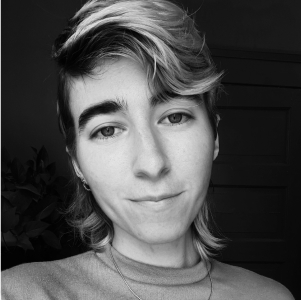
Kayli Salzano, former gallery manager at Waterloo Arts, has been selected as the 2023–25 George Gund Foundation fellow. In their previous role, Salzano sought and mounted art exhibitions featuring Northeast Ohio artists and organized public programs to connect visual art with community projects. They implemented a public open call process for generating exhibitions and re-established a gallery committee to assist the organization in collaborative decision-making on behalf of artists and educators.
Prior to this, Salzano worked as project + visiting artist coordinator at Reinberger Gallery where they assisted the director in gallery operations, facilitated a weekly artist lecture series, and maintained the Institute’s collection of artworks. Salzano has additionally worked as an art handler for several exhibition spaces in Cleveland, and they have completed both a gallery internship at Praxis Fiber Workshop and an Artist Leadership Residency hosted by Assembly for the Arts and Cleveland Leadership Center.
Salzano received their Bachelor of Fine Arts from the Cleveland Institute of Art, electing to complete one semester at the Pennsylvania Academy of Fine Arts in Philadelphia to hone their skills in traditional sculpture. In addition to maintaining a visual arts practice spanning performance, fiber art, and installation, Salzano enjoys cooking, biking, and gardening.
Salzano resides in Cleveland and began their work with the Foundation in early June.
The George Gund Foundation Fellows program, started in 2004, provides an opportunity for civic-minded professionals to work in philanthropy, at a foundation that proudly plays an active role in supporting equity, climate justice, and democracy throughout Greater Cleveland and in organizations, initiatives, and policy deliberations that impact our community. Each fellow, selected from a nationwide pool of applicants, works at the Foundation for two years.
Related News
Our commitment to racial justice
cGasparro
Since 1952, The George Gund Foundation has been an ardent supporter of public education, and we continue to work with our heroic community partners to provide equitable access to high-quality education and career opportunities for Cleveland youth and families. The Cleveland Metropolitan School District (CMSD) boasts a vibrant, PreK–12 student body comprised of scholars who come from various racial, ethnic, cultural, and socioeconomic backgrounds. According to a CMSD fast facts infographic, 63.8 percent of CMSD scholars identify as African-American; 17.2 percent as Hispanic; 14.5 percent as White; and 4.5 percent are listed as other.
Whenever I visit a CMSD school building, I always leave feeling inspired by the abundance of diverse faces, their respective lived experiences, their brilliance, and their unwavering resilience. In racially and culturally diverse settings, we are able to learn with and from other people and communities, but such settings also present opportunities for us to 1) look inwardly and learn about ourselves; 2) examine and challenge our assumptions, beliefs, and values; and 3) work toward becoming the best version of ourselves. Diversity is our superpower, and it is perhaps the only thing that can truly shape the future of our country and humanity for the better.
Yesterday, the U.S. Supreme Court majority—in a landmark ruling—held that U.S. colleges and universities can no longer consider race as a basis for college admissions. As an African-American, first-generation college student, who had to overcome racism, poverty, and homelessness in pursuit of a college education and upward mobility, I am deeply appreciative and unapologetic about the fact that race played a role in my college admission process. SCOTUS got it wrong: race-based affirmative action is still very much needed to ensure equitable access to higher education and to prevent both intentional and unintentional discriminatory practices in college admissions.
When I applied to college, my academic profile paled in comparison to my white and suburban school counterparts, but the admissions team saw something in me that challenged both traditional notions of academic excellence and indicators of college success. Far too often institutions of higher education use trivial gatekeeping measures such as culturally-biased standardized testing, expected family contribution, and legacy/college affiliation as a basis for admissions. Such practices are inherently discriminatory, as they create a bar to access for first-generation college students—especially those who come from historically marginalized groups and under resourced families. In addition to barring access to higher education, these discriminatory practices help widen and perpetuate existing gaps in educational attainment, financial security, and other pertinent life outcomes between white people and other racial/ethnic groups.
I am extremely fortunate.
Thankfully, Oberlin College’s admissions team employed a holistic review of my candidacy. They saw grit, resiliency, a high grade-point average, a rigorous course load, glowing letters of support, community service, extracurricular activities, and a young, Black man whose lived experience could bring a unique perspective to classroom discussions and to the campus community at large. Moreover, the admissions team got it right: while race is a social construction, it is a real phenomenon that has real life ramifications in our country and beyond. Simply put, race matters! As history suggests, when declarations of “equality” or “opportunity for all” go unchecked, policies and practices that give rise to disparate treatment and/or disparate impact tend to ensue. Given our turbulent and unreconciled past, any effort or pursuit of “equality” will fall short as equality is not a substitute for or a viable pathway to justice and/or wellbeing.
The United States of America’s record on racism is dismal, and while the SCOTUS majority and various elected officials—quite erroneously—believe they can legislate racism out of our country’s collective consciousness, racism is deeply embedded into the fabric of our country’s DNA, public/private institutions, and citizenry. Is it possible to achieve a full-fledged democracy where policymakers lack empathy, compassion, and sensitivity to the harsh realities of structural, systemic, and institutional racism? At The George Gund Foundation, we remain firmly committed to supporting our partners in education, along with the plethora of students and families deeply affected by SCOTUS’ callous and unpatriotic decision to eliminate race-conscious admissions at colleges and universities.

Tony Richardson, President
Related News
The Gund Foundation awards $6.8 million at its February meeting
cGasparro
The George Gund Foundation awarded $6.8 million at its first board meeting of 2023. Among other awards, Trustees approved $250,000 to SPACES for operating support and programming needs for “Everlasting Plastics.”
SPACES was recently selected to organize the U.S. exhibition at the 2023 Venice Architecture Biennale. The theme chosen by SPACES, “Everlasting Plastics,” will involve sculptures and installations from five contributors—Xavi Aguirre, Simon Anton, Ang Li, Norman Teague, and Lauren Yeager. The exhibit will invite visitors from across the globe to reframe the overabundance of plastic debris. After the Biennale concludes, SPACES intends to share the exhibit with Clevelanders and facilitate hands-on programming.
“We are ecstatic to support SPACES in this historic opportunity on the world stage,” said Tony Richardson, president of The George Gund Foundation.
Additional grants across program areas reflect the Foundation’s priorities of greater racial and gender equity, climate justice, and democracy building, such as:
- $300,000 over two years to OPAWL – Building AAPI Feminist Leadership to build organizational capacity and stability to elevate the voices, visibility, and progressive leadership of AAPI women, nonbinary, queer, and trans people in Ohio.
- $250,000 over two years to Smart Development, a community-based organization focused on bridging the gap in services for refugees, immigrants, ethnic minorities, and Arab/Arabic speaking residents.
- $370,000 to the Cleveland Metropolitan School District in support of the Cleveland Foundation’s Public Service Fellowship, which will place six talented college graduates with a passion for service in the district for the 2023–2024 school year.
- $350,000 over two years to One Fair Wage to advance racial equity in the service sector through policy change, industry organizing and training, and storytelling.
- $200,000 over two years to the Northeast Ohio Hispanic Center for Economic Development (aka Hispanic Business Center) to support entrepreneurship, business growth, and wealth creation within the Latino community in Greater Cleveland.
- $75,000 over two years to the Kent State University Foundation to complete the first comprehensive and holistic LGBTQIA+ specific community needs assessment for Greater Cleveland.
- $225,000 over three years to the Nature Conservancy Ohio Chapter to continue its advocacy work around freshwater resources, climate and energy, and funding for state environmental agencies and programs in Ohio.
- $250,000 over two years to the Institute on Taxation and Economic Policy, a tax and fiscal policy research and analysis nonprofit with a deep commitment to creating equitable fiscal policy, to deepen its state-level data and analysis and highlight its disaggregated racial impact data.
- $150,000 for Honesty for Education, a nonpartisan, statewide coalition that champions honesty in education at the Ohio Statehouse, State Board of Education, and local school districts.
- $400,000 over two years to Assembly for the Arts for its work to elevate arts and culture as a major priority for Greater Cleveland, Cuyahoga County, and the surrounding region. Assembly is also working on expanding resources for the arts and culture sector and increasing equity within the field.
- $200,000 over two years to Action for the Climate Emergency (ACE) to continue youth engagement and organizing work in Ohio. ACE educates young people on the science of climate change and empowers them to take action.
Further details on the February 2023 grants can be found at gundfoundation.org.
The George Gund Foundation was established in 1952 by George Gund, former chair of the Cleveland Trust Company. The Foundation funds programs that enhance our understanding of the physical and social environment in which we live and increase our ability to cope with its changing requirements. Grants are made three times a year in the areas of climate and environmental justice, creative culture and arts, public education, thriving families and social justice, and vibrant neighborhoods and inclusive economy. Foundation commitments to date have totaled over $891 million.
Related News
The George Gund Foundation Seeks Program Assistant
cGasparro
The George Gund Foundation is seeking a program assistant to join its team. The program assistant will support assigned program directors as well as engage in administrative and programmatic tasks that support the Foundation’s grantmaking process.
The Foundation has engaged Cheryl C. Perez and her team to lead the search process. The position profiles with relevant details can be found by clicking here. The George Gund Foundation is an equal opportunity employer and pursues equity in all of its work, including hiring. Please share this information with potential applicants and encourage their consideration of it.
Related News
The George Gund Foundation Seeks 2023–25 Fellow
cGasparro
The George Gund Foundation fellowship provides an opportunity for promising professionals to work inside the Foundation, a philanthropic organization that plays a vital role in supporting the civic life of Greater Cleveland and in various state and national policy deliberations that affect our community. The fellowship is a two-year, full-time commitment beginning in summer 2023, requiring residence in Greater Cleveland during the term of engagement.
The fellowship experience will be tailored to the Foundation’s needs and, to some extent, to the fellow’s interests. The fellow will engage in a wide range of substantive assignments across program areas, which include climate and environmental justice, creative culture and arts, public education, thriving families and social justice, and vibrant neighborhoods and inclusive economy. Across those program areas is an underlying commitment to addressing climate change and environmental degradation; entrenched and accelerating inequality, especially racial inequity; and weakened democracy.
For more information on the fellowship, please follow this link to the job description which includes information to submit an application.
Related News
The Gund Foundation awards $19.3 million at its November meeting
cGasparro
On the heels of the midterm elections, The George Gund Foundation awarded $19.3 million at its final board meeting of 2022. Among other awards, the Trustees approved up to $500,000 to support the leadership transition for incoming Cuyahoga County Executive Chris Ronayne.
“Thoughtful and transparent leadership transitions must be both a hallmark and promise of our democracy,” said Tony Richardson, president of The George Gund Foundation. “To be sure, the work of democracy building encompasses robust citizen participation in elections, but it also must extend beyond elections to effective governance.” Supporting nonpartisan democracy is one of the core priorities of the Foundation.
Additional grants reflect the Foundation’s other core priorities of racial equity and climate justice as well as priorities in program areas. Grants include:
- $1,000,000 for ongoing efforts to reduce the infant mortality rate of Black babies in Cleveland, Cuyahoga County, and Summit County, including $500,000 over two years to First Year Cleveland and $500,000 over two years to Birthing Beautiful Communities.
- $1,500,000 to the Amalgamated Charitable Foundation to support the Partnership for Equitable and Resilient Communities (PERC) initiative, which will support the development of equity-based community development strategies that shift power and resources to Black, Indigenous, and Latinx communities.
- $200,000 over two years to the Spanish American Committee, the oldest Hispanic nonprofit agency in Ohio serving as a gateway to socioeconomic success for Latino individuals and families.
- $325,000 to continue the work of the Racial Equity Racial Justice initiative, which includes thirteen local movement leader organizations: Black Environmental Leaders, Building Freedom, Refresh Collective, Fellowship of Christian Athletes, Ghetto Therapy, Growing Church Environment, IOBY, Khnemu Foundation, Literacy in the H.O.O.D., Legal Aid Society, Peel Dem Layers Back, See You at the Top, and Thrive Scholars.
- $100,000 to the Achievement Centers for Children to form and operate a public advocacy network of local nonprofit service providers serving children and adults with disabilities and their families.
- $750,000 over three years to Youth Opportunities Unlimited to support the delivery of the planning and career exploration (PACE) curriculum in the Cleveland Metropolitan School District, which seeks to equip students in grades 6–12 with career interests, exploration, and pathways.
- $150,000 to the Association of African American Cultural Gardens, which is dedicated to the completion and maintenance of the African American Cultural Garden in Cleveland’s Cultural Gardens.
- $100,000 over two years to Literary Cleveland to assist writers and readers, promote new and existing high-quality literature, and advance Northeast Ohio as a vital center of diverse voices and visions.
- $375,000 over three years to Environmental Health Watch to conduct healthy home services, particularly for low-income, Cleveland neighborhoods with a high prevalence of substandard, disinvested housing.
- $120,000 over two years to Praxis Integrated Fiber Workshop to support the indigo cooperative, which uses and distributes indigo dye made on-site, and provides education about indigo’s harmful past while engaging the mostly BIPOC residents of the Collinwood neighborhood.
- $175,000 to the United Black Fund to support post-event planning, programming, and infrastructure building efforts that build momentum from the FutureLAND conference and help create a more inclusive local tech sector.
- $1,000,000 over two years to Growth Opportunity Partners to continue building its Green Bank, the only Green Bank in Ohio and the first Black-led Green Bank in the country.
Further details on the November 2022 grants can be found at gundfoundation.org.
The George Gund Foundation was established in 1952 by George Gund, former chair of the Cleveland Trust Company. The Foundation funds programs that enhance our understanding of the physical and social environment in which we live and increase our ability to cope with its changing requirements. Grants are made three times a year in the areas of climate and environmental justice, creative culture and arts, public education, thriving families and social justice, and vibrant neighborhoods and inclusive economy. Foundation commitments to date have totaled over $904 million.
Related News
Emily Lundgard named director of strategy
cGasparro
Emily Lundgard, senior program director for Enterprise Community Partners, is joining The George Gund Foundation as director of strategy. In this new role, Lundgard will work closely with the program team to integrate and align grantmaking strategies to advance the Foundation’s overarching priorities—Climate Change, Equity and Racial Justice, and Democracy Building—as outlined in the Foundation’s What We Believe statement, as well as cultivate relationships to achieve program alignment; conduct research on local, state, and federal policy issues; and implement a consistent communications strategy.
Lundgard has more than fifteen years of federal, state, and local level public and nonprofit service. At Enterprise Community Partners, she formulated and directed Enterprise Ohio’s first policy and advocacy agenda. That included building broad coalitions to create more affordable quality homes and stronger, more equitable neighborhoods. She advanced policies including tax abatement reform and renters’ rights. Lundgard also built and directed the Lead Safe Cleveland Coalition, a public-private coalition to address and prevent the crisis of childhood lead poisoning; helped create and capitalize a multi-million dollar Lead Safe Home Fund; and drafted and led advocacy for new local and state lead safe policies.
Previously, Lundgard worked for Cuyahoga County government as the director of communications. She managed media relations, marketing, and internal communications for the County Executive and all county departments. Before that role, Lundgard served as Cuyahoga County’s first ever special assistant for regional collaboration where she coordinated collaboration among the area’s 59 communities and led Cuyahoga County’s state and federal advocacy efforts. Lundgard also worked at the Ohio Department of Development as a legislative liaison under Governors Strickland and Kasich and served as legislative service commission fellow in the Ohio Senate.
“We are excited for Emily to join our team,” said Gund president Tony Richardson. “Her experience in coalition building, public policy, and strategic communications will bode well for the Foundation as we seek to further integrate our program areas and bolster our digital presence.”
Lundgard’s civic engagements include serving on the board of trustees for Ohio City Incorporated and the advisory board for Cuyahoga County Division of Senior and Adult Services. Lundgard holds a bachelor’s degree in history and political science and a master’s degree in public administration from Ohio University.
Related News
The George Gund Foundation seeks candidates
cGasparro
The George Gund Foundation is seeking two candidates to join its team. The program officer will play a key role in grant reviews and special projects for the program directors for Thriving Families and Social Justice (primary) and Public Education (secondary). The program assistant will support assigned program directors/program officers as well as engage in administrative and programmatic tasks that support the Foundation’s grantmaking process.
The Foundation has engaged Cheryl C. Perez and her team to lead the search process. The position profiles with relevant details can be found by clicking here. The George Gund Foundation is an equal opportunity employer and pursues equity in all of its work, including hiring. Please share this information with potential applicants and encourage their consideration of it.